

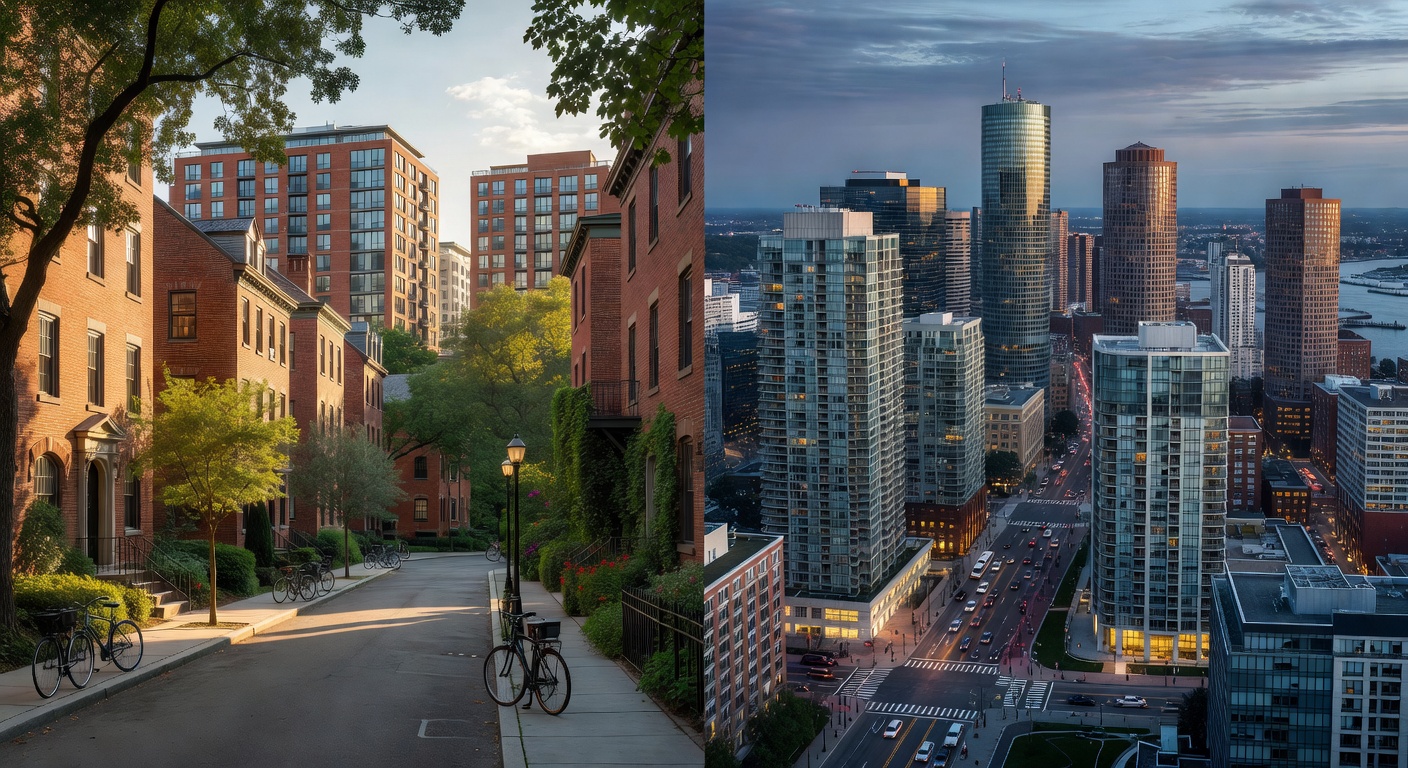
Cambridge vs Boston Apartments: Where Renters Get More Value
If you are searching for Cambridge apartments or Boston apartments in 2026, you are probably asking the same question most renters ask: where do you actually get more value for your money?
At first glance, Boston and Cambridge feel closely connected. They share public transit systems, sit only minutes apart, and both rank among the country’s most competitive rental markets. But once you start comparing pricing, commute quality, apartment size, walkability, and daily lifestyle convenience, the differences become much more noticeable.
For some renters, Boston offers stronger value because of its larger apartment inventory, nightlife access, and neighborhood variety. For others, Cambridge provides better long-term convenience, especially for professionals working in biotech, research, education, and technology.
If you are actively browsing apartments for rent, studio apartments, or searching rentals near me, understanding how these two markets compare can help you avoid overpaying and choose a neighborhood that actually fits your lifestyle.
Understanding the Difference Between Boston and Cambridge
Boston is the region’s largest urban center and offers a much wider variety of housing styles, pricing tiers, and neighborhood experiences. Cambridge, while smaller, has developed one of the strongest rental markets in the country because of its connection to Harvard University, MIT, and the Kendall Square biotech corridor.
That difference shapes almost everything about pricing and apartment availability.
Boston apartments tend to offer:
- More inventory
- More luxury high-rises
- More roommate-friendly layouts
- More neighborhood variety
Cambridge apartments, on the other hand, often attract renters who prioritize:
- Walkability
- Short commutes
- Academic access
- Neighborhood stability
- Bike-friendly infrastructure
Both cities remain expensive, but the type of value you receive can be very different depending on your priorities.
Which City Has More Affordable Apartments?
One of the biggest misconceptions renters have is assuming Cambridge is always more expensive than Boston. In reality, the answer depends heavily on:
- Apartment type
- Building age
- Neighborhood
- Transit access
- Amenities
Boston offers a broader range of pricing because the city itself is much larger. A renter looking in Allston or East Boston may find significantly cheaper options than someone searching in Back Bay or Seaport.
Cambridge tends to have tighter pricing overall because supply is more limited. Demand remains extremely high due to the concentration of:
- Biotech companies
- Research institutions
- Universities
- High-income professionals
As a result, Cambridge apartments often cost more per square foot compared to Boston apartments.
Still, many renters willingly pay that premium because they save time and money elsewhere through shorter commutes and reduced transportation costs.
Apartment Size and Space Comparison
When renters compare value, apartment size matters just as much as rent itself.
Boston generally wins when it comes to:
- Larger apartment inventory
- Bigger roommate layouts
- Multifamily housing options
- Professionally managed buildings
Neighborhoods like Brighton, Dorchester, and Jamaica Plain often provide more square footage for the same monthly budget compared to Cambridge.
For example, a renter looking for studio apartments may notice:
- Boston offers more inventory overall
- Cambridge studios are often smaller
- Boston has more pricing flexibility
However, Cambridge apartments frequently compensate for smaller unit sizes with stronger walkability and neighborhood convenience.
That tradeoff becomes important in 2026 as renters increasingly balance:
- Housing costs
- Commute time
- Lifestyle quality
- Transportation expenses
Walkability and Daily Lifestyle
This is where Cambridge often stands out.
Neighborhoods like Harvard Square, Central Square, and Kendall Square allow renters to live almost entirely without a car. Grocery stores, coffee shops, restaurants, parks, and transit are often within walking distance.
Cambridge apartments are especially attractive for renters who value:
- Short commutes
- Bike access
- Quiet streets
- Residential atmosphere
- Daily convenience
Boston is also highly walkable, but the experience varies more by neighborhood. Areas like Back Bay and South End feel very different from neighborhoods farther from the urban core.
What Boston does offer is greater variety. Renters can choose between:
- Fast-paced downtown living
- Student-heavy neighborhoods
- Residential brownstone areas
- Waterfront luxury districts
That flexibility is one reason Boston apartments continue attracting such a wide range of renters.
Which Market Is More Competitive?
Both markets remain highly competitive in 2026, but Cambridge apartments often move faster because inventory is more limited.
Current Greater Boston rental market trends continue showing:
- Low vacancy rates
- Strong demand
- Fast-moving listings
Cambridge inventory is especially competitive near:
- Harvard
- MIT
- Kendall Square
Boston apartments also move quickly, especially in:
- Fenway
- Allston
- Brighton
- Back Bay
- South End
However, Boston’s larger inventory creates more opportunities for renters to compare pricing and apartment styles.
That means renters searching Cambridge apartments often need:
- Faster paperwork
- Earlier apartment searches
- Greater flexibility
- Stronger budgets
Boston vs Cambridge for Young Professionals
For many young professionals, Boston offers stronger lifestyle variety.
Boston apartments provide easier access to:
- Nightlife
- Entertainment
- Sports venues
- Restaurants
- Luxury amenity buildings
The city also tends to offer more social flexibility because neighborhoods attract a broader mix of renters.
Cambridge appeals more to professionals prioritizing:
- Work-life balance
- Walkability
- Academic culture
- Commute reduction
A renter working in biotech or research may gain far more practical value from living close to Kendall Square than from saving slightly on monthly rent elsewhere.
Studio Apartments: Which City Offers Better Value?
If you are specifically searching for studio apartments, Boston usually offers:
- More listings
- More building choices
- More professionally managed inventory
Cambridge studios are often:
- More expensive
- Smaller
- Harder to secure quickly
Still, many renters accept smaller Cambridge apartments because daily convenience offsets the higher housing costs.
Living within walking distance of work or transit can dramatically improve overall quality of life, especially in high-traffic urban areas.
Transit and Commuting
Boston apartments generally offer stronger regional transit flexibility because the city connects directly to:
- Multiple subway lines
- Commuter rail stations
- South Station
- North Station
This matters for renters commuting across Greater Boston.
Cambridge works best for renters whose lives revolve around:
- Kendall Square
- Harvard
- MIT
- Tech and biotech campuses
For those renters, avoiding a cross-city commute can be worth paying higher rent.
So, Which City Offers Better Rental Value?
The truth is that “value” depends entirely on your priorities.
Boston apartments usually deliver stronger value for renters focused on:
- Space
- Inventory variety
- Entertainment access
- Building amenities
- Flexible pricing
Cambridge apartments often provide stronger value for renters prioritizing:
- Walkability
- Commute quality
- Academic access
- Residential atmosphere
- Long-term convenience
Neither market is inexpensive in 2026. Both remain highly competitive because of:
- Strong employment growth
- Limited housing supply
- University demand
- Persistent renter competition
The smartest renters are the ones who compare total lifestyle value rather than rent alone.
Sometimes the better deal is not the cheaper apartment. It is the apartment that improves your daily life the most.
FAQ About Cambridge vs Boston Apartments
Are Cambridge apartments more expensive than Boston apartments?
In many neighborhoods, yes. Cambridge apartments often cost more per square foot because inventory is limited and demand remains extremely high.
Which city has more apartments for rent?
Boston has a significantly larger rental inventory overall.
Are studio apartments easier to find in Boston?
Yes. Boston generally has more studio apartment inventory and more pricing flexibility.
Is Cambridge quieter than Boston?
In many areas, yes. Cambridge tends to feel more residential and less nightlife-focused.
Which city is better for commuters?
It depends on where you work. Boston offers stronger regional transit access, while Cambridge is ideal for biotech and academic professionals working locally.
Which city is better for first-time renters?
Boston often provides more entry-level apartment options because of its larger inventory and wider range of neighborhoods.