

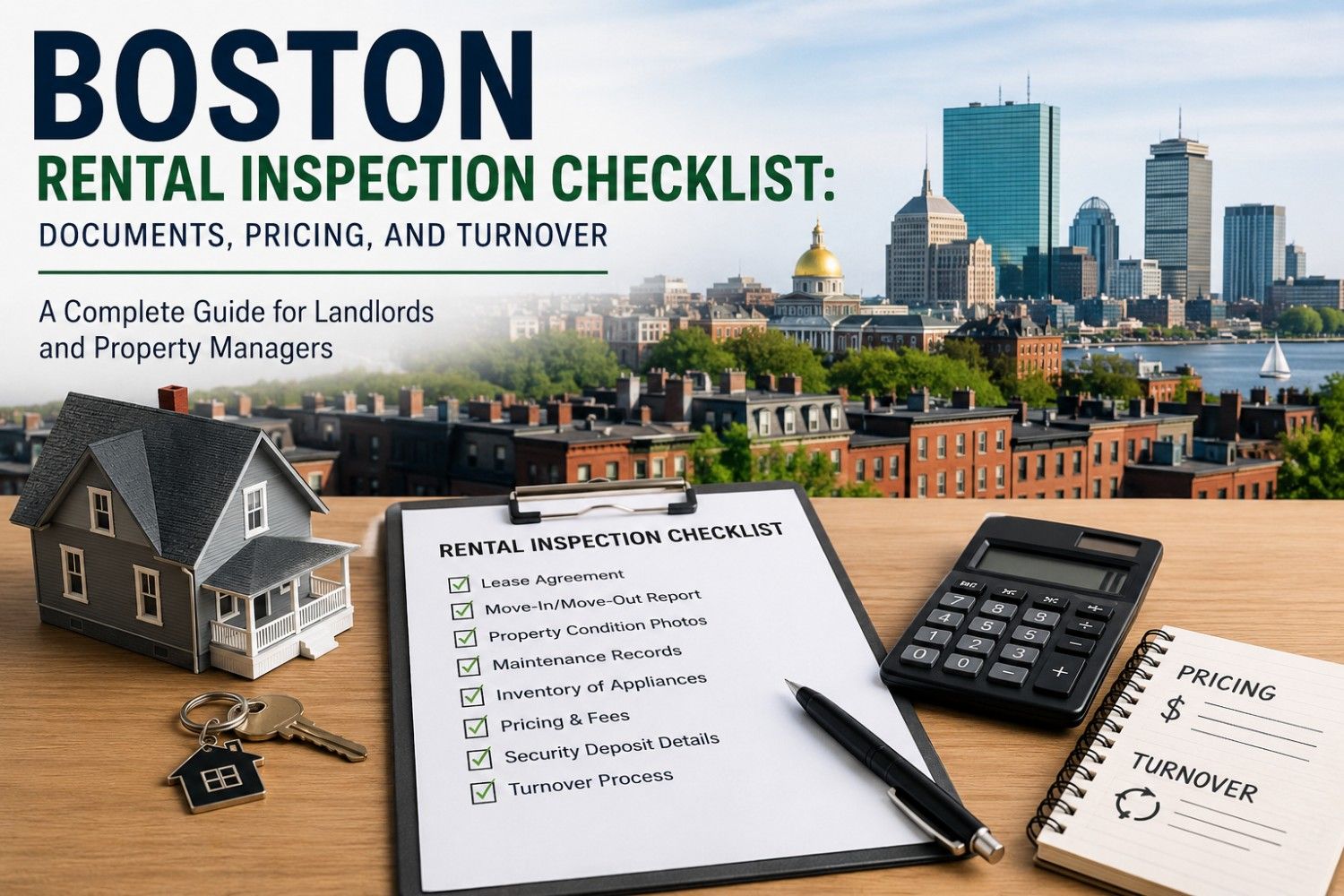
Boston Rental Inspection Checklist: Documents, Pricing, and Turnover
Owning rental property in Boston can be rewarding, but successful property management requires more than simply finding tenants. Every lease renewal, tenant move-out, and new occupancy creates an opportunity to protect your investment, maintain your property’s condition, and reduce costly surprises.
One of the most effective ways to achieve that is by following a consistent Boston landlord checklist.
Whether you own a single rental property or manage multiple units, having the right inspection process, organized documentation, and turnover strategy can improve tenant relationships while protecting your long-term investment.
This guide walks through the essential inspection steps, documents every landlord should maintain, pricing considerations between tenants, and best practices for managing rental turnover in 2026.
Why Every Landlord Needs a Boston Landlord Checklist
Rental properties experience normal wear and tear over time, but small maintenance issues can quickly become expensive repairs if they go unnoticed.
A structured Boston landlord checklist helps property owners:
- Identify maintenance concerns early
- Document property condition
- Improve tenant communication
- Prepare units for new occupants
- Protect rental income
- Simplify turnover between leases
More importantly, consistent inspections create clear documentation that benefits both landlords and tenants throughout the lease period.
Before a Tenant Moves In: Prepare the Property Properly
The leasing process begins long before a tenant receives the keys.
Before occupancy, landlords should carefully inspect every part of the property to ensure it is clean, safe, and fully functional.
Areas that deserve particular attention include:
- Walls and ceilings
- Flooring and carpets
- Windows and locks
- Smoke and carbon monoxide detectors
- Plumbing fixtures
- Electrical outlets
- Heating and cooling systems
- Kitchen appliances
Taking photographs before move-in provides valuable documentation if questions arise later regarding property condition.
This is also the ideal time to review your simple rental lease agreement and ensure all expectations are clearly explained before occupancy begins.
Keep Your Rental Documents Organized
One of the biggest mistakes landlords make is waiting until problems arise before organizing paperwork.
Every rental property should have a complete documentation file.
Essential records include:
- A signed simple rental agreement
- A completed simple rental lease agreement
- Move-in inspection reports
- Maintenance records
- Utility information
- Security deposit documentation
- Tenant communication records
Organized documentation makes lease renewals, inspections, and future property sales significantly easier.
It also helps resolve misunderstandings more efficiently should disputes occur.
Conduct Routine Rental Inspections
Many landlords only inspect their property when tenants move out.
Instead, periodic inspections throughout the lease help identify maintenance issues before they become costly repairs.
Routine inspections allow landlords to monitor:
- Plumbing leaks
- HVAC performance
- Appliance condition
- Water damage
- Safety concerns
- Exterior maintenance
Scheduling inspections respectfully and providing proper notice creates transparency while helping maintain the property’s overall condition.
Regular inspections also demonstrate proactive property management rather than reactive maintenance.
Pricing Your Rental Between Tenants
Every turnover presents an opportunity to evaluate current rental pricing.
Rather than automatically increasing rent each year, landlords should review current market conditions before determining new pricing.
Factors worth evaluating include:
- Comparable rental listings
- Neighborhood demand
- Vacancy rates
- Property improvements
- Local competition
- Seasonal market activity
Pricing too aggressively may increase vacancy time, while pricing below market can reduce long-term returns.
Finding the right balance is often more valuable than pursuing the highest possible monthly rent.
When Should You Send a Rent Increase Letter?
If market conditions justify higher rent, communication becomes extremely important.
A professionally written rent increase letter should:
- Clearly explain the new rental amount
- Specify the effective date
- Reference lease renewal timing
- Provide appropriate notice
- Maintain a professional tone
Even long-term tenants appreciate transparent communication.
A respectful approach often encourages lease renewals and strengthens landlord-tenant relationships.
Whenever possible, explain improvements or market factors that contributed to the adjustment.
Turnover: The Most Important Stage of Property Management
Every vacancy creates both opportunity and expense.
The faster a property is prepared for its next tenant, the lower the potential income loss.
A successful turnover process typically includes:
Property Inspection
Review every room for damage beyond normal wear and tear.
Maintenance and Repairs
Complete repairs before marketing the property rather than delaying them until after a new tenant signs.
Deep Cleaning
Professional cleaning creates stronger first impressions and helps justify competitive rental pricing.
Updated Marketing
New photographs and refreshed property descriptions can attract stronger applicants.
A smooth turnover process often reduces vacancy while improving tenant satisfaction from the very beginning.
Why a Rental Ledger Matters
Accurate financial records are just as important as property maintenance.
Every landlord should maintain a detailed rental ledger template documenting:
- Monthly rent payments
- Late fees
- Security deposits
- Maintenance charges
- Outstanding balances
Organized financial records simplify bookkeeping, tax preparation, and lease management.
They also provide valuable documentation if payment disputes occur in the future.
Whether managed digitally or manually, consistency is essential.
Common Inspection Mistakes Landlords Should Avoid
Even experienced property owners occasionally overlook important details.
Some of the most common mistakes include:
- Skipping move-in documentation
- Delaying maintenance repairs
- Forgetting smoke detector checks
- Failing to photograph property condition
- Losing important lease paperwork
- Inconsistent inspection schedules
Most of these problems can be avoided simply by following a standardized inspection process for every property.
Consistency protects both the landlord and the tenant.
Your Annual Boston Landlord Checklist
To simplify annual property management, review the following checklist:
Property Maintenance
- Inspect plumbing
- Test smoke detectors
- Check heating systems
- Review electrical fixtures
- Examine windows and locks
- Inspect roofing (if applicable)
Documentation
- Update lease agreements
- Organize inspection reports
- Review tenant files
- Maintain rental ledger
Financial Review
- Evaluate rental pricing
- Review operating expenses
- Consider market conditions
- Update maintenance budget
Completing this checklist annually helps reduce unexpected repairs and improves long-term property performance.
How Professional Property Guidance Can Help
Managing rental property involves much more than collecting rent.
Successful landlords monitor market conditions, maintain organized records, communicate effectively with tenants, and keep properties in excellent condition throughout every lease cycle.
Working with experienced local real estate professionals can help landlords better understand pricing trends, neighborhood demand, tenant expectations, and investment opportunities.
This guidance becomes especially valuable in competitive markets like Greater Boston.
Final Thoughts
Successful rental properties are built on preparation, consistency, and proactive management.
A well-organized Boston landlord checklist helps landlords protect their investment while creating a better experience for tenants. From maintaining a properly executed simple rental agreement and simple rental lease agreement to preparing a professional rent increase letter and keeping an accurate rental ledger template, every document plays an important role in efficient property management.
By combining thorough inspections with organized documentation and smart pricing decisions, landlords can reduce vacancy, preserve property value, and position their rentals for long-term success.
Manage Your Boston Rental Property with Confidence
Whether you own a single rental unit or manage multiple investment properties, Fenway Property Advisors helps landlords navigate every stage of the rental process. From pricing guidance and tenant turnover strategies to property marketing and local market expertise, our team provides practical solutions designed to protect your investment and maximize long-term returns.
If you’re looking for trusted guidance on leasing, property management, or expanding your rental portfolio in Greater Boston, contact Fenway Property Advisors today and let our local expertise work for you.
Frequently Asked Questions
How often should landlords inspect a rental property?
Many landlords perform inspections before move-in, during the lease with proper notice, and after move-out. The frequency depends on lease terms and local regulations.
What documents should every landlord keep?
Important records include a signed simple rental agreement, simple rental lease agreement, inspection reports, maintenance records, tenant communications, and financial documentation.
What is a rental ledger?
A rental ledger template tracks rent payments, deposits, fees, and outstanding balances throughout the tenancy.
When should landlords send a rent increase letter?
A rent increase letter should be provided with sufficient notice before the lease renewal period, following applicable state and local requirements.
Why are move-in inspections important?
Move-in inspections document the property’s condition before occupancy, helping protect both landlords and tenants throughout the lease.
How can landlords reduce vacancy between tenants?
Preparing the property early, completing repairs promptly, pricing competitively, and marketing the unit effectively can help reduce vacancy time.