
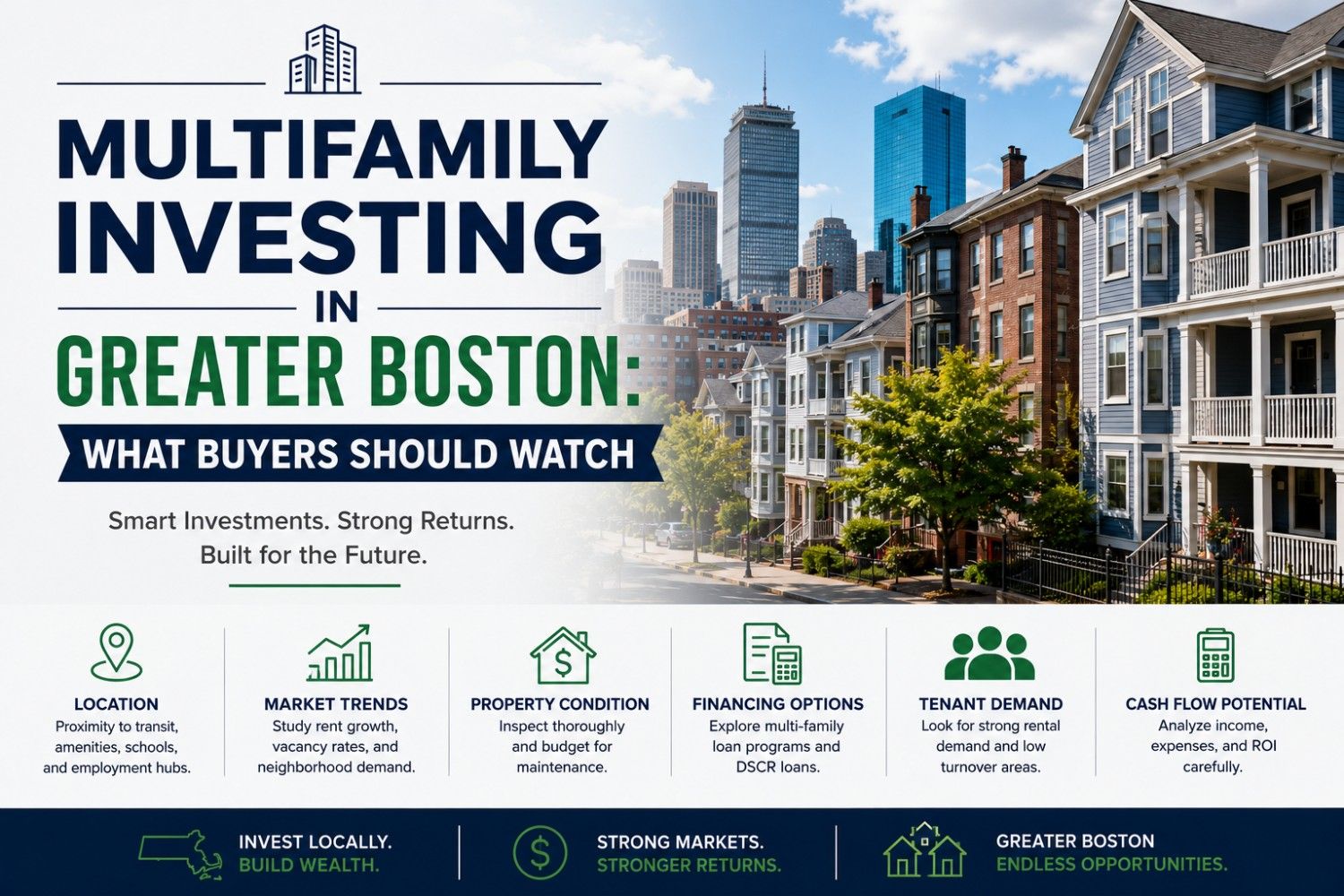
Multifamily Investing in Greater Boston: What Buyers Should Watch
Real estate investing has long been one of the most popular ways to build long-term wealth, and few markets have remained as resilient as Greater Boston. While single-family homes continue attracting buyers, multifamily properties have become an increasingly attractive option for investors seeking rental income, portfolio diversification, and long-term appreciation.
However, purchasing an investment property in Boston is not simply about finding a building with multiple units. Successful investors understand that neighborhood trends, rental demand, financing, operating expenses, and future growth potential all play a major role in determining whether a property becomes a profitable investment.
Whether you are purchasing your first investment property, searching for a Boston multifamily for sale, or expanding your real estate portfolio, this guide outlines the most important factors buyers should evaluate before making an investment in 2026.
Why Greater Boston Remains One of the Strongest Real Estate Investment Markets
Greater Boston continues to attract investors because of its unique economic foundation. Unlike markets that depend heavily on one industry, Boston benefits from a diverse economy driven by education, healthcare, biotechnology, finance, and technology.
Major employers, world-renowned universities, and internationally recognized research institutions create a steady flow of renters throughout the region.
This consistent demand helps support:
- Strong occupancy rates
- Stable rental demand
- Long-term property appreciation
- Diverse tenant pools
For investors looking at Greater Boston real estate, these factors contribute to one of the country’s most stable housing markets.
What Is Considered a Multifamily Property?
A multifamily property is any residential building designed to accommodate more than one household.
Common examples include:
- Duplexes
- Triplexes
- Four-family homes
- Small apartment buildings
- Mixed-use residential properties
Many buyers begin investing with two-family or three-family homes because they can generate rental income while remaining easier to finance than larger commercial buildings.
Owner-occupied multifamily properties have also become increasingly popular, allowing buyers to live in one unit while renting the others.
Why More Buyers Are Choosing an Investment Property in Boston
Investing in multifamily real estate offers several advantages that single-family properties may not provide.
Some of the biggest benefits include:
- Multiple rental income streams
- Reduced vacancy risk
- Long-term appreciation potential
- Opportunities for owner occupancy
- Greater cash flow flexibility
If one tenant moves out, rental income from the remaining units can continue offsetting operating expenses.
For many first-time investors, this additional income provides greater financial stability than relying on a single tenant.
Location Matters More Than the Property Itself
One of the biggest mistakes investors make is focusing exclusively on the building while overlooking the surrounding neighborhood.
In real estate investing, location often has a greater impact on long-term performance than the property itself.
Before purchasing an investment property, evaluate:
- Employment growth
- Public transportation
- Walkability
- School quality
- Future development
- Local amenities
- Population trends
Neighborhoods benefiting from infrastructure improvements or new commercial development often experience stronger appreciation over time.
Where Investors Are Looking Across Greater Boston
Rather than concentrating exclusively on downtown Boston, many investors are expanding their searches throughout Greater Boston.
Communities attracting increased investor attention include:
Boston
Boston continues offering strong rental demand driven by universities, hospitals, and major employers. Neighborhoods with consistent tenant demand remain highly competitive.
Cambridge
Cambridge attracts professionals, researchers, and graduate students, creating one of the region’s strongest rental markets despite higher acquisition costs.
Somerville
Transit improvements and neighborhood redevelopment continue supporting long-term appreciation and rental demand throughout Somerville.
Quincy
Quincy’s growing downtown, Red Line access, and continued residential development have increased investor interest over recent years.
Brookline
While inventory remains limited, Brookline continues attracting buyers seeking stable long-term investments supported by strong neighborhood demand.
Successful investors evaluate each market differently based on rental income potential, purchase price, and long-term appreciation.
Understanding Rental Demand Before You Buy
A property’s rental income depends on more than simply counting bedrooms.
Investors should understand who their likely tenants will be.
Potential tenant groups may include:
- Young professionals
- Graduate students
- Healthcare workers
- Families
- Corporate relocations
- Long-term residents
Different neighborhoods attract different tenant profiles.
Understanding local demand helps investors estimate vacancy risk and rental pricing more accurately.
Financial Numbers Every Investor Should Review
One of the most common investment mistakes is focusing only on the purchase price.
A profitable investment property in Boston requires careful financial analysis.
Before making an offer, review:
- Expected rental income
- Property taxes
- Insurance costs
- Maintenance expenses
- Utility responsibilities
- Vacancy assumptions
- Capital improvement costs
Investors should also consider future expenses rather than evaluating only today’s operating costs.
Older multifamily properties may require significant updates over time, making long-term budgeting essential.
Don’t Ignore Property Condition
Many multifamily properties in Greater Boston are decades old.
While historic buildings often have tremendous character, they may also require ongoing maintenance.
During your due diligence, pay close attention to:
- Roofing
- Foundation
- Plumbing
- Electrical systems
- Heating equipment
- Windows
- Exterior condition
Professional inspections become especially important because repair costs can multiply quickly in larger buildings.
A thorough inspection helps buyers understand both immediate repair needs and future capital expenses.
Understanding Local Regulations
Owning a rental property involves more than collecting rent.
Investors should understand local regulations affecting:
- Rental licensing
- Building codes
- Fair housing requirements
- Safety standards
- Lead paint compliance
- Tenant rights
Working with experienced legal and real estate professionals can help investors navigate these responsibilities while reducing potential risks.
Should You Buy a Move-In Ready Property or a Value-Add Opportunity?
Every investor has a different strategy.
Move-in ready properties typically offer:
- Faster rental income
- Lower renovation costs
- Simpler management
- Reduced construction risk
Value-add properties may provide opportunities to increase returns through renovations and operational improvements.
However, they also require additional planning, budgeting, and risk management.
The right approach depends on your experience level, available capital, and long-term investment goals.
A Smart Due Diligence Checklist
Before purchasing any Boston multifamily for sale, make sure you review:
- Current rental income
- Existing leases
- Operating expenses
- Maintenance history
- Building inspection
- Comparable rental rates
- Neighborhood trends
- Future development plans
Completing this due diligence can help reduce unexpected costs after closing.
Common Mistakes Multifamily Investors Should Avoid
Even experienced investors occasionally make costly mistakes.
Some of the most common include:
- Buying based only on emotion
- Underestimating repair costs
- Ignoring neighborhood trends
- Overestimating rental income
- Failing to inspect the property
- Overlooking financing expenses
Avoiding these mistakes often makes the difference between a successful investment and an expensive lesson.
Why Working With a Local Real Estate Expert Matters
Multifamily investing requires specialized market knowledge.
An experienced real estate professional can help investors:
- Identify emerging neighborhoods
- Evaluate comparable sales
- Analyze investment opportunities
- Understand local regulations
- Negotiate competitive offers
This local expertise becomes particularly valuable in Greater Boston, where market conditions can vary significantly from one neighborhood to another.
Final Thoughts on Multifamily Investing in Greater Boston
Multifamily real estate continues to be one of the strongest long-term investment opportunities throughout Greater Boston.
Whether you are purchasing your first investment property, searching for a Boston multifamily for sale, or expanding an existing portfolio, success depends on careful planning rather than quick decisions.
The strongest investments are rarely chosen because they look attractive on paper alone. They are selected because they combine strong locations, sustainable rental demand, realistic financial projections, and long-term growth potential.
With the right research and professional guidance, multifamily investing can become an important part of building long-term financial success.
Build Your Investment Portfolio with Fenway Property Advisors
Finding the right investment property in Boston requires more than browsing listings. It takes local market expertise, financial insight, and a deep understanding of neighborhood trends.
At Fenway Property Advisors, we help investors identify high-potential opportunities throughout Greater Boston real estate, from owner-occupied multifamily homes to income-producing investment properties.
Whether you are exploring your first Boston multifamily for sale or expanding an established portfolio, our experienced team is here to guide you through every step of the buying process.
Contact Fenway Property Advisors today to discover investment opportunities that align with your financial goals.
Frequently Asked Questions
Is Greater Boston a good place to invest in multifamily real estate?
Yes. Strong employment, world-class universities, and consistent rental demand continue supporting long-term investment opportunities throughout Greater Boston.
What is the best type of investment property for beginners?
Many first-time investors begin with duplexes or three-family homes because they offer rental income while remaining easier to finance than larger apartment buildings.
Should I buy a fully renovated multifamily property?
It depends on your investment strategy. Renovated properties provide faster rental income, while value-add properties may offer higher long-term returns through improvements.
How important is location when buying an investment property?
Location is one of the most important factors because it directly influences rental demand, appreciation, and long-term investment performance.
Do I need a property inspection before purchasing?
Absolutely. A professional inspection helps identify structural, mechanical, and maintenance issues before closing.
Should I work with a local real estate advisor?
Yes. A local expert understands neighborhood trends, investment opportunities, pricing strategies, and market conditions that can significantly influence your investment decisions.